HACCP Warehousing for Foo...
Food handling businesses in Australia require proper and...
In Australia, the cost of outsourcing services with a third-party logistics provider varies on the dimensions of storage required, flow of inventory, number of orders to be shipped, pick, and pack, shipping, and additional handling costs. If in doubt, prices do not remain the same for every business. Australian price guides indicate that providers may require separate charges for storage, receiving, pick and pack, setup, and other operations. This way, companies should compare the total monthly cost instead of considering only when the provider is quoting the lowest price per order.
The 3PL warehousing cost/pricing in Australia in 2026 will vary with the amount of storage space, volume of orders, types of products, and fulfilment services required. For general guidance on costs in the market, firms can anticipate the following:
The above are indicative costs for 2026 in the market; it is not an industry standard.
A 3PL bill usually goes beyond ensuring that goods are stored within the warehouse. The range of tasks covered under the agreement will depend on the agreement but could involve receiving goods, storage, stock record maintenance, picking goods, packing and shipping. Other tasks offered include returns, kitting, special handling and technology integration. Prime 3PL is involved in providing services including warehouse Storage, inventory management, pick and pack, pallet storage and container delivery services.
Receiving is concerned with the tasks done when items enter the warehouse. Employees could unload shipments, count stock, take a stock inventory, and place products where they will be stored. The total price may vary depending on how the stock enters the warehouse - pallet, box, or piece.
Storage cost is that related to storing the products in the warehouse until they are required. It could be calculated per pallet, per shelf, per bin, per cubic meter, etc. Firms with fluctuating inventories must find out whether they will pay for actual or minimum space used.
Pick and pack fees pertain to the tasks involved in locating goods, making an order, and packing them for shipping. There is usually an order fee that will be charged by the supplier in addition to an extra fee depending on the number of goods ordered. Special packing boxes and labelling may result in higher fees.
Order fulfillment combines many warehouse functions from the ordering process to the packing stage in preparation for shipment. Third Party Logistics can integrate with sales channels, process orders, pick items, pack them, and ship them. Prime 3PL is able to handle the pick-and-pack and order fulfillment process.
Shipping is normally an independent element of the total logistics costs. This depends on the size of the package, its weight, destination, speed of delivery, and carrier company. Businesses must ascertain whether the cost charged by the 3PL company includes shipping costs or not.
Returning involves receiving the product at the warehouse level, testing the product, updating the inventory, and finally determining whether the product is fit for reselling. Some companies charge for the returns separately. Companies that are likely to have many returns must consider this cost while calculating their total logistics costs.
Inventory management enables a business to know what products they have, where the products are held and whether they require additional stock. A WMS can provide functionalities like scanning, stock keeping, order processing and reporting. Charges for the use of technology could be included or charged separately.
The 3PL services may be offered by including account management and software provisions under their base prices or through separate charges. Technology fees may also be charged depending on the integration between Shopify, marketplaces, accounting applications, and other systems.
There must be a thorough analysis of all the stages in the life of the item before formulating a logistics budget. The cost of storing the items constitutes just one factor. Receiving, fulfilling orders, shipping and returning can all impact the overall cost. According to Australian price guides, there are different rates charged by suppliers.
The cost of storage may be based on pallets, shelf, bin or cubic meter. For instance, in a 2026 pricing example in Australia, the cost of pallet storage is usually around A25-A45 per pallet per month, but this depends on location, warehousing in Brisbane, and contract.
Receiving costs will include unloading, inspecting, counting, scanning and storing the goods received. An Australian 2026 pricing example for receiving cost includes a general range of A14-A50 per pallet, depending on the state of arrival of the goods.
The pick-and-pack fee usually consists of a basic fee per order and an incremental fee for extra goods. The following is one modern Australian guideline that states A2.50-A4 for the first product and approximately A$0.50 for any extra product.
The cost of freight varies with the shipping company, the destination, the size of the package, weight, and other parameters. An enterprise shipping small packages within Australia has a totally different cost profile compared to a company importing containers.
Returns may involve receiving the returned items, inspecting them, restocking, repackaging, and updating inventories. While some service providers include returns in their package, others charge for each return item. This should be clarified beforehand.
A number of business factors determine the final quote. A small company with hundreds of basic orders will most probably have different needs from an importer dealing with thousands of items or bulky items. As per Prime 3PL, its warehouse solutions can be customized depending on the quantity and nature of stock as well as business operations.
Increased order quantities can result in increased fulfillment fees but could provide an opportunity for negotiation on volume discounts. A good understanding of the number of orders per month and the forecasted growth must be gained by the provider before making a detailed proposal.
A company with 20 SKUs needs less inventory management compared to one with 2,000 SKUs. Increased product lines may lead to increased storage space and additional labor required for scanning, checking and managing.
Heavy or large items may need more warehouse space and specialized handling equipment. Such items can have increased freight fees too. The product size must thus be shared with the 3PL company before finalizing costs.
The volume of inventory held in the warehouse influences the storage needs of the company. Companies that have high inventory levels might be required to have more pallets or floor space.
While normal products would require normal storage facilities, some special products might need different types of storage. Storage needs influence the cost level.
An order for a single product is easier to manage than an order for many products. Such an order will have many SKU's, different quantities and other special instructions.
Standard-size cartons and envelopes will be easier to handle. The use of customized cartons, brand-specific packaging, inserts, or custom packaging materials may add to labor costs and complexities.
There might be certain products that need to be handled in a special manner due to their fragility, size, or nature. Specialized handling might involve higher costs.
The number of sales might increase at Christmas or some other high-season periods. This might increase the requirements for inventory and orders.
The choice of location will affect the costs and efficiency of deliveries from the warehouse. For example, using the warehouse located near customers can help in reducing some delivery time or distances, while the costs of using the warehouse will vary based on location.
Businesses requiring advanced tracking of inventory, integration with marketplaces, or other systems integration needs may require more technological capabilities.
There is no global 3PL pricing model. Businesses may opt for a single pricing model, or they could employ various models under the same 3PL agreement. It is crucial to know the 3PL pricing model since the price quoted may not be the total cost incurred on a monthly basis.
This pricing model bases payment to the service provider on what the business actually uses. It may suit a firm with varying needs since the costs may go up or down depending on usage.
Payment for the service is based on the number of orders handled by the provider. Any additional item in that order may have its own separate picking fee.
The business is billed on the warehouse storage space it uses. This is good for companies seeking storage only.
It gives the business stability in terms of budgeting for expenses. It is necessary to have a detailed understanding of what services are included and what attracts extra charges.
There may be some instances where there is minimum monthly payment even if the usage of the service is little. Companies have to verify the issue before selecting any provider.
Customized pricing may be common if the company has unique products, high volume, and complicated fulfillment requirements. According to Prime 3PL, their services are customized according to the needs of the business.
For example, imagine an Australian online business having 500 orders per month, 40 SKUs with an average inventory of 10 pallets. Let’s assume its monthly costs of warehousing include A350 for storage, A1,500 for pick & pack, A300 for receiving & inventory handling and A150 for extra services.
Fulfillment-related warehouse cost will be A 2.300 per month prior to shipping. The cost per order will be A4.60 calculated by dividing A$2,300 by 500 orders. Then, there will be freight charged separately. Just to understand the calculation, it is not a standard Australian market quote.
The cost per order will vary according to what is considered in the calculation. In a situation where storage, receiving, pick and pack, and account fees amount to A2,500 per month and 500 orders, the cost per order based on the warehouse operations is A5. Shipping, returns, and other costs can bring up the cost per order.
Businesses should not compare a service provider's price for pick and pack services against another provider's full cost of fulfillment services.
Low prices in headlines become more expensive after including additional services. Checking all possible fees prior to signing a contract allows businesses to plan a more realistic budget.
Setup & Onboarding Fees
System Setup, Inventory Transfer & Account Setup may come with one-time fees.
Minimum Monthly Fee
A minimum fee may be applicable regardless of low activity in a month.
Inventory Invoicing Fees
Fees may be charged for goods that need to be counted, sorted, tagged, and handled separately.
Container Offloading Fees
Container offloading may include labor-intensive procedures, especially in case goods are not palletized but floor loaded.
Special Handling Fees
Goods that require special handling such as fragile or oversize items.
Packaging Materials Fees
Custom packaging materials, branded bags, labels, and inserts.
Kitting and Bundling Charges
Charges for kitting together multiple items as one package may include additional labor charges.
Returns Charges
A returned item may be subject to inspection or disposal charges.
Disposal Charges
In cases where stock is not in good condition, is expired, or unwanted, it will have to be disposed of at a charge.
Peak Period Charge
In certain situations, peak period charge might be included.
Accounting or Software Charges
Certain systems or software might attract additional charges.
Freight Charges
Charges for fuel, remote locations, oversize freight, and carriers will increase shipping costs.
The comparison should comprise the total costs of operation for each model and not just the warehouse rent or 3PL invoice.
|
Cost Factor |
3PL Warehousing |
In-House Fulfilment |
|---|---|---|
|
Warehouse space |
Included as a service charge |
Business pays rent or owns space |
|
Warehouse staff |
Usually part of service pricing |
Business hires and manages staff |
|
Storage |
Charged according to agreement |
Direct warehouse expense |
|
Pick and pack |
Charged per order or service |
Internal labour cost |
|
Technology |
May be included or separately charged |
Software and system costs |
|
Packaging |
May be included or charged separately |
Business purchases materials |
|
Shipping |
Usually arranged through carriers |
Business manages carrier accounts |
|
Scalability |
Can expand with requirements |
More space and staff may be needed |
|
Management time |
Lower internal workload |
More daily management required |
The effectiveness of 3PL depends on the business model, order volume, and resources available within the company. For companies experiencing growth, lack of adequate warehouse space, increase in number of orders via the internet, or excessive time spent on order fulfilment processes, outsourcing could be quite beneficial and would even grant access to already existing warehouse and logistics systems.
On the other hand, for small businesses with extremely low order volumes, it is important to consider carefully the cost structures involved.
It is necessary to consider cost in relation to service quality, flexibility, and scalability of the provider. In some cases, the cheaper cost is not actually cheap when considering all the extra charges.
A thorough discussion before taking quotations avoids any unpleasant surprises regarding costs in the future. Provide the service provider with complete details regarding your stock and order volume and get the whole cost breakdown.
The 3PL provider should have relevant information regarding your business prior to preparing an estimate for you. The better the information, the easier it will be to compare the estimates among various providers.
It is not necessary that when one talks about cost reduction; he means that one has the lowest cost of storage. With effective planning of inventory, good packaging and fast order processing, one may pay less to their logistics company.
A simple computation will help businesses in determining their estimated budget for the month without having to seek a quote.
Monthly 3PL Cost = Storage + Receiving + Pick and Pack + Shipping + Returns + Additional Services + Monthly Fees
For instance, where the storage cost is A350, receiving A300, pick and pack A1,500 and other costs in the warehouse A150, then the monthly cost in the warehouse before shipping is A$2,300.
It will be possible to determine the cost per order using this formula:
Average Cost Per Order = Total Monthly 3PL Cost ÷ Number of Monthly Orders
This formula will give an accurate view of the actual cost involved since we have considered just one cost in the computation.
The cost of 3PL in Australia depends on the quantity of the inventory that is kept by a business, the number of orders processed by it and the extent of the handling needed. The elements that might affect the final cost include storage, receiving, picking and packing, shipping, returns, technology and additional services. Examples of prices currently charged in Australia demonstrate the reasons for comparing pricing structures as opposed to a single price.
Prime 3PL offers warehousing, pallet storage, inventory management, picking and packing and logistics in Brisbane and Heathwood with customized services based on individual needs of companies. Companies that require a custom quote can contact Prime 3PL on 1300477463.
A. 3PL warehousing costs in Australia depend on storage space, order volume, handling, and other services. Your total price may include storage, receiving, picking, packing, inventory management, and fulfilment charges.
A. The cost per pallet depends on the warehouse location, pallet size, storage period, and number of pallets. Some providers charge a monthly storage rate based on the space your stock uses.
A. The cost per order depends on the number of items, picking and packing work, packaging, and shipping requirements. Your monthly order volume may also affect the fulfilment rate offered by the provider.
A. 3PL warehouse pricing can include storage, receiving, inventory handling, order picking, packing, and dispatch. Depending on the provider, services such as returns, labelling, and inventory tracking may have separate charges.
A. Yes, some Australian 3PL companies charge monthly fees for storage, inventory management, account services, or other warehouse support. The monthly cost usually depends on your storage needs and service requirements.
A. Shipping costs are not always included in standard 3PL fees. They may be charged separately based on parcel weight, size, delivery location, shipping speed, and the courier or freight service used.
A. Extra charges may apply for receiving stock, packaging, labelling, returns, long-term storage, stock transfers, or special handling. Ask for a complete pricing breakdown so you know the total cost.
A. 3PL can help reduce the cost of warehouse rent, staff, equipment, utilities, and daily operations. However, the overall cost depends on your storage requirements, order volume, and business operations.
A. Add storage, receiving, picking, packing, packaging, returns, and shipping charges to calculate your total fulfilment cost. Also check for minimum monthly fees and any additional service charges.
A. Provide details about your products, storage needs, monthly orders, average order size, delivery locations, and packaging requirements. Prime 3PL can review these details and provide suitable pricing. Call 1300477463 for enquiries.
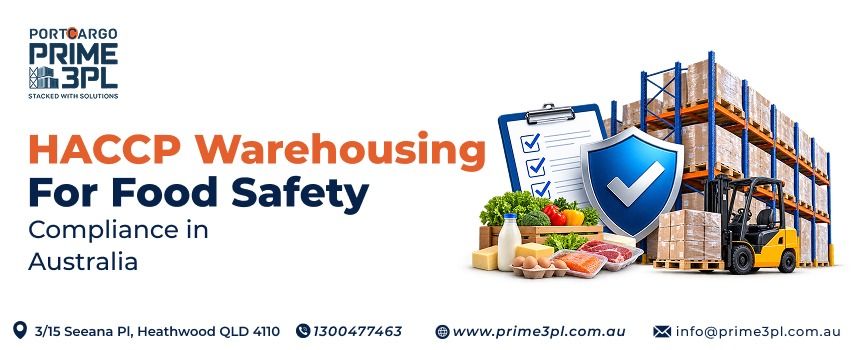
Food handling businesses in Australia require proper and...
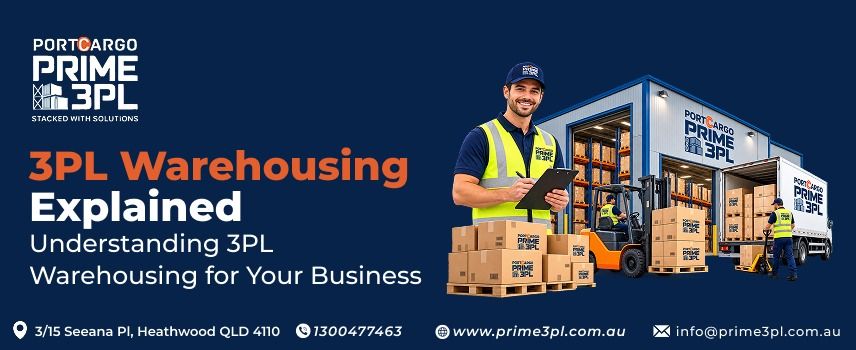
Handling the storage of goods, maintenance of inventory,...
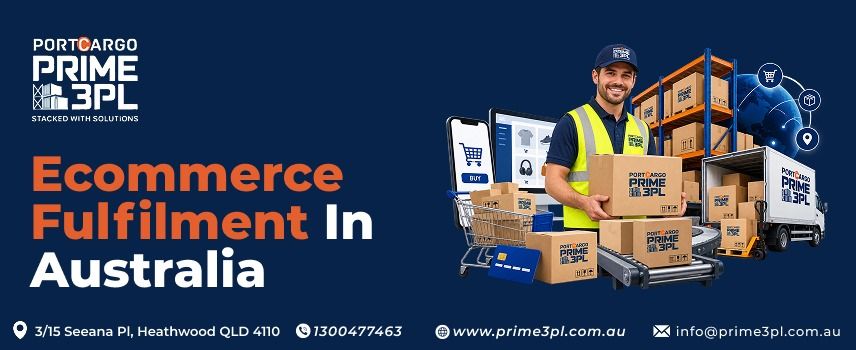
Behind the simple act of listing items for sale and takin...
Discover our logistics, warehousing, fulfillment and supply chain solutions designed to support businesses of every size.

From a single parcel to full truckloads. we ensure your shipments reach their destination - safely and on time.

we get back to you within one business day.

Your goods are protected every step of the way.

Dedicated logistics specialists ready to help
Welcome to WhatsApp Chat and Share. Contact us if you need help.
Oprational Manager All Sales