What to Look for When Cho...
The choice of the correct logistics company is a key issu...
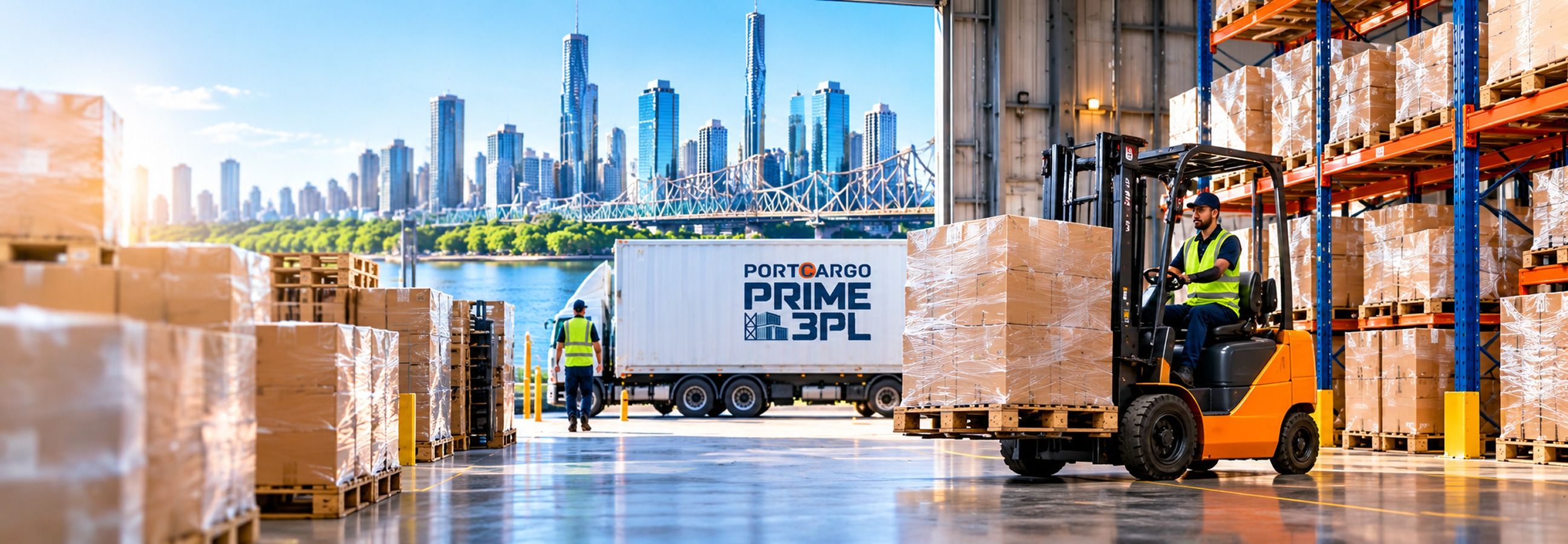
Warehouses are an important part of Australia's supply chain. They help businesses store products, manage stock, prepare customer orders, and deliver goods on time. However, rising customer expectations, increasing operating expenses, labor challenges, and growing eCommerce demand are making warehouse management more complex.
Traditional methods that depend heavily on manual stock counting, spreadsheets, and paper-based processes may struggle to meet these demands. This is where artificial intelligence (AI) is becoming useful.
AI in warehouse management in Australia is helping businesses make better decisions, improve inventory accuracy, plan 3PL warehouse activities, and reduce avoidable costs. In 2027, the focus is moving beyond simple automation towards smarter systems that can analyze information, predict problems, and recommend actions.
For Australian businesses, including retailers, importers, wholesalers, and eCommerce companies, understanding these changes can help them build a more efficient supply chain.
In this guide, we explore the benefits of AI in warehouse management, the role of AI inventory management systems, emerging warehouse management technology trends in 2027, and how businesses can prepare for the future.
AI in warehouse management means using technologies such as machine learning, computer vision, predictive analytics, and intelligent software to improve warehouse operations.
These systems analyze information from stock records, customer orders, warehouse equipment, and previous sales patterns. They then help warehouse teams make decisions more quickly and accurately.
For example, an AI system may identify products that are likely to run out of stock, recommend a better storage location, or predict when order volumes will increase.
Traditional warehouse software mainly records and processes information according to predefined rules. AI can go further by identifying patterns in data and adapting its recommendations as conditions change.
AI does not mean that every warehouse needs expensive robots or a fully automated facility. Many businesses can begin with forecasting tools, inventory analytics, or software that improves existing processes.
Inventory errors can create serious problems for businesses. A product may appear available in the system but be missing from its actual storage location. In other cases, excess stock may occupy valuable warehousing storage.
AI-powered inventory management systems can compare sales records, stock movements, receipts, and order information to identify unusual differences.
When connected to suitable barcode scanners, sensors, or computer vision tools, these systems can also help detect counting errors and misplaced products.
For example, an Australian eCommerce business selling home appliances could use inventory analytics to identify repeated differences between recorded stock and physical stock. The warehouse team could investigate the cause before it affects customer orders.
The result is better stock visibility, fewer avoidable errors, and more reliable fulfillment.
Demand changes throughout the year. Australian retailers may experience higher order volumes during major shopping events, holiday periods, and seasonal promotions.
AI forecasting tools analyze historical sales, current orders, lead times, and other relevant data to estimate future demand.
These forecasts can help warehouse managers decide how much stock to hold, when to reorder products, and which items need more warehousing storage space.
For example, a retailer preparing for a major online sales event can use demand forecasts to identify fast-moving products before orders increase.
Forecasts are not always correct, especially when unexpected events affect customer demand. However, regularly updated predictions can provide a better starting point than relying solely on past experience.
Order picking involves locating products, collecting the correct quantities, and preparing them for dispatch. Poorly planned warehouse layouts can significantly consume time.
AI can analyze product demand, order combinations, travel distances, and picking patterns to recommend more efficient workflows.
Products frequently ordered together may be placed closer to one another. Fast-moving products can be stored in easier-to-reach locations, while picking tasks can be assigned according to available staff and workload.
Robotics and automated sorting equipment can support these processes where the volume and layout justify the investment.
For customers, an efficient Pick and Pack service can help reduce order errors, improve packing accuracy, and ensure faster, more dependable dispatch times.
Warehouse space is valuable, particularly when businesses need to store different product sizes, manage seasonal stock, or handle changing order volumes.
AI tools can study inventory movement, product dimensions, storage requirements, and picking frequency to recommend suitable storage locations.
For example, products that move quickly may benefit from accessible picking areas, while slower-moving items can be stored in less frequently accessed locations, provided safety and handling requirements are met.
Better space planning can reduce unnecessary movement and help businesses make more effective use of their existing facilities.
Warehouse workloads rarely remain the same every day. Order volumes may increase during promotions, seasonal peaks, or unexpected demand changes.
AI can use previous order patterns and incoming order information to estimate staffing needs. It may also help managers allocate picking, packing, and replenishment tasks more effectively.
This allows businesses to prepare for busy periods rather than responding only after delays begin.
AI should support warehouse employees, not replace sound management decisions. Human supervision remains important for safety, training, exceptions, and situations that require practical judgment.
Warehouse equipment such as conveyors, forklifts, and automated sorting systems needs regular maintenance.
Where suitable sensor and maintenance data is available, AI can identify patterns that may indicate equipment problems. This can help maintenance teams investigate potential faults before they cause major disruption.
For example, repeated vibration or temperature changes in a conveyor motor may indicate a problem that requires inspection.
Predictive maintenance is most useful when the equipment produces reliable data and the business has a clear process for acting on alerts.
Customers want accurate stock information, reliable dispatch, and clear delivery updates. Warehouse problems can affect all three.
AI can help identify orders at risk of delay, highlight inventory discrepancies, and support more accurate fulfillment planning.
For businesses using third-party logistics providers, better warehouse data can also improve coordination between storage, order processing, and dispatch.
These improvements can help businesses protect customer relationships while supporting future growth.
AI inventory management systems combine warehouse data with analytical models to support stock-related decisions.
A typical process includes the following steps:
For these systems to work well, the underlying information must be accurate and updated regularly. Incorrect product records, inconsistent stock units, or missing transactions can reduce the quality of AI recommendations.
Businesses should also check whether their inventory tools can integrate with their warehouse management system (WMS), enterprise resource planning (ERP) platform, and order management software.
Warehouse automation in Australia is developing through a combination of intelligent software, connected equipment, and robotics.
Several technologies are becoming important to warehouse planning.
Autonomous mobile robots can move goods or transport picking containers through suitable warehouse environments. When integrated with warehouse software, they can help reduce unnecessary walking and improve material movement.
However, robots are not suitable for every facility. Warehouse layout, floor conditions, product types, safety requirements, and order volumes all influence whether automation makes commercial sense.
Computer vision uses cameras and AI models to analyze images and identify objects or patterns.
In warehousing, it can support inventory checks, package identification, damage detection, and selected safety-monitoring tasks.
Gartner predicted that 50% of companies with warehouse operations would use AI-enabled vision systems for cycle counting by 2027. This is a forecast, not confirmation that half of all companies have adopted the technology. It nevertheless highlights the growing interest in automated inventory visibility.
Modern AI-powered warehouse management systems can support demand forecasting, task prioritization, stock placement, and exception management.
Some newer tools can also summarize operational information in natural language, helping managers understand what changed during a shift or why orders are falling behind.
The most useful systems connect recommendations to actual warehouse workflows instead of providing insights that employees cannot easily act upon.
Generative AI can help staff search procedures, understand reports, and prepare work instructions. AI agents may also coordinate several steps in a workflow, such as identifying a stock discrepancy, gathering relevant records, and proposing a resolution.
The level of autonomy varies by product and implementation. Businesses should keep human approval for high-impact actions, financial commitments, safety-sensitive decisions, and unusual inventory adjustments.
One of the main reasons businesses explore AI is the opportunity to control warehouse operating expenses.
AI may help reduce costs in several ways:
However, AI does not guarantee immediate savings. Software subscriptions, hardware, integration, training, maintenance, and process changes all have costs.
Businesses should measure results against a baseline before implementation. Useful measures include cost per order, inventory accuracy, picking accuracy, average order processing time, stockout frequency, and on-time dispatch rate.
A practical return-on-investment calculation should compare the verified financial benefits with the total cost of implementing and operating the solution.
The following developments are worth watching as businesses plan their warehouse operations for 2027.
Warehouse teams are increasingly interested in identifying potential problems before they disrupt operations. Demand forecasting, labor planning, and equipment monitoring can help managers act earlier.
Businesses are likely to focus on tools that recommend actions while keeping employees involved in important decisions. This approach can improve trust and reduce the risk of incorrect automated actions.
AI becomes more useful when inventory, orders, transport, and warehouse equipment share reliable information. Better integration can help businesses understand how warehouse decisions affect the wider supply chain.4. Flexible Automation
Rather than automating every task at once, businesses can introduce targeted solutions such as automated sorting, mobile robots, or vision-assisted stock checks.
This allows them to test performance and expand when the business case is clear.
It’s also important to check AI recommendations for accuracy, particularly when they affect stock availability, worker safety, or customer commitments.
Businesses do not need to transform their entire warehouse in one step. A practical starting plan can reduce risk and make the benefits easier to measure.
Step 1: Identify the main problem. Decide whether the priority is inventory accuracy, slow picking, excess stock, labor planning, or delayed dispatch.
Step 2: Review current data. Check whether stock records, product codes, order histories, and supplier lead times are complete and consistent.
Step 3: Choose one suitable use case. Start with a manageable task, such as demand forecasting or identifying inventory discrepancies.
Step 4: Run a controlled pilot. Test the solution in one product category, warehouse zone, or operational process before expanding it.
Step 5: Measure business results. Compare performance before and after implementation using agreed measures such as accuracy, time, cost, and service levels.
Step 6: Train employees and improve the process. Explain how the system works, when to trust its recommendations, and when manual checks are necessary.
Step 7: Expand only when results justify it. Use the pilot's findings to decide whether additional automation or software investment makes sense.
This step-by-step approach is often more practical than purchasing complex technology without first understanding the warehouse's actual needs.
Choosing the right warehouse and logistics approach involves more than adopting new technology. Businesses also need dependable inventory processes, suitable storage capacity, efficient order handling, and clear coordination across the supply chain.
Prime3PL can be a starting point for businesses exploring warehousing and third-party logistics support in Australia. When evaluating a logistics partner, ask how it manages stock visibility, order processing, reporting, system integration, and peak-season demand.
It is also worth confirming which technology capabilities are currently available, what data you can access, and whether the service can scale as your business grows.
A well-planned 3PL arrangement can help businesses focus on sales, customer service, and growth while their logistics requirements are managed through an appropriate operating model.
Looking for a warehousing and logistics solution for your business?
Contact Prime3PL on 1300477463 to discuss your requirements and explore suitable options.
AI in warehouse management in Australia is creating new opportunities to improve stock accuracy, warehouse planning, order fulfillment, and cost control. In 2027, the biggest opportunity is not simply to automate more tasks. It is to use reliable data and practical AI tools to make better operational decisions.
Businesses can begin with demand forecasting, inventory analytics, or targeted automation, then expand as measurable results become clear. Good data, employee training, system integration, and human oversight remain essential.
For Australian businesses planning their next stage of growth, a combination of effective warehouse processes, suitable technology, and the right logistics partner can help create a more flexible and dependable supply chain.
AI in warehouse management in Australia refers to the use of artificial intelligence, machine learning, predictive analytics, and related technologies to improve warehouse operations. Common applications include inventory forecasting, stock counting, order picking, labor planning, and equipment monitoring.
The main benefits of AI in warehouse management include improved inventory accuracy, faster order processing, better demand forecasting, more efficient warehouse space utilization, improved workforce planning, and fewer operational errors. However, the results depend on data quality and how well the technology suits the business's needs.
AI inventory management systems analyze sales, stock levels, incoming orders, and supplier lead times to identify possible shortages or excess inventory. They can help businesses make better replenishment decisions, improve stock visibility, and prepare for changes in demand.
Yes, they can help reduce avoidable costs by improving stock planning, limiting picking errors, reducing unnecessary movement, and supporting predictive maintenance. However, savings are not guaranteed and should be measured against implementation, integration, and ongoing operating costs.
Prime3PL is a point of contact for businesses exploring third-party logistics and warehousing options in Australia. Businesses can contact Prime3PL on 1300477463 to discuss their requirements and ask about available storage, fulfillment, inventory visibility, and logistics services.

The choice of the correct logistics company is a key issu...

Delivery optimization is critical for businesses to be ab...
Logistics is an indispensable tool that helps businesses...
Discover our logistics, warehousing, fulfillment and supply chain solutions designed to support businesses of every size.

From a single parcel to full truckloads. we ensure your shipments reach their destination - safely and on time.

we get back to you within one business day.

Your goods are protected every step of the way.

Dedicated logistics specialists ready to help
Welcome to WhatsApp Chat and Share. Contact us if you need help.
Oprational Manager All Sales