Optimizing Warehouse Stor...
Efficient storage in the warehouse is often highly import...
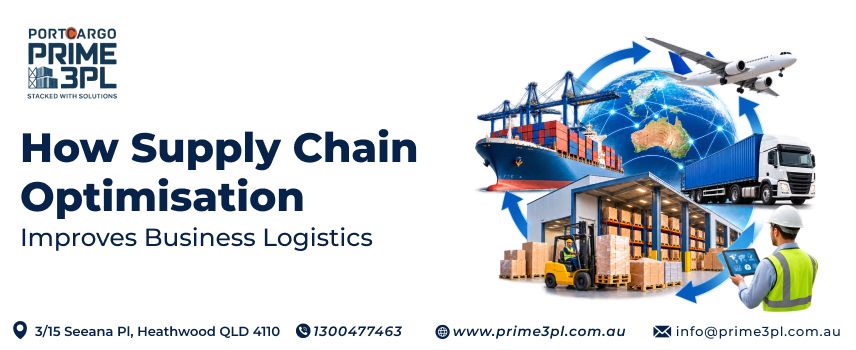
In business, there is a need for an efficient supply chain in order to control the flow of goods, costs, and the delivery process. The combination of procurement, storage, transport, and delivery makes it easy to run a business. Through supply chain optimisation, businesses are able to develop ways to optimise the flow and storage of goods and use their resources efficiently. Prime 3PL is a company that helps businesses in logistics and supply chain management.
Supply chain optimisation means making the various stages of movement of goods from suppliers to consumers more effective. This involves procurement, inventory management, warehousing, ordering, shipping, and finally delivering the product. In other words, the purpose is to carry out all these processes in a more effective way without unnecessary waste. The process of 3PL logistics will be more effective if each stage is carefully planned and all stages have the right information exchange. Through information and logistics technologies, businesses may discover the problems and improve their work.
For an effective supply chain, there are four attributes that are necessary for the successful management of a business. These attributes combined together contribute to making product availability more convenient, controlling costs, and facilitating dependable deliveries.
Optimising a supply chain will definitely have an effect on the overall performance of the business. Through proper planning, businesses will be able to regulate their transport costs, manage their inventory, minimise delays in deliveries, and meet their customer needs. Logistics optimisation also assists in identifying the areas of waste in time and money within the business. With improved communication and better information, businesses will make sound decisions at each and every stage. The following benefits clearly illustrate the importance of having an efficient supply chain process.
Bad route selection, partially loaded cars, and frequent trips may lead to higher transportation costs. Transportation optimisation enables companies to select appropriate routes, consolidate shipments and utilise the capacity of their vehicles. This will help them reduce unnecessary consumption of fuel and delivery costs. Logistics cost reduction also requires proper scheduling of the shipping process and avoiding any possible delays. The firms can analyse transport information periodically and determine the costly routes and plan for the future.
Overstocking takes up valuable space, and understocking may result in delayed orders for customers. Inventory management control assists organisations in having proper stock according to demand and sales. Improved tracking of stock will help in identifying the high-turnover and low-turnover items. Warehouse efficiency increases when goods are kept in proper places, picking paths are appropriately set up, and proper tracking of stock movements is done. This leads to less handling time, cost savings on storage, and better organisation of warehouse operations.
A customer expects the delivery of his orders on time after processing them correctly. Order fulfillment will be easy if there is a connection between order data, stock details, packaging process, and shipping schedule. In this way, there will be no confusion, and it will be easier for employees to complete each process without any delay. There will be improvement in delivery performance if transport arrangements are done beforehand and there are appropriate transportation vehicles whenever required.
Businesses require precise information about their stocks, locations of shipments, and estimated time of arrival for deliveries. Supply chain visibility allows individuals to understand what is happening at different levels in the ordering process. It is easy to pinpoint any issues that may arise and act on them before they become problematic. In some cases, real-time shipment tracking can be quite beneficial in providing valuable information about shipments in progress, based on the information available to the firm and its logistics partners.
Demand may vary depending on seasons, consumer taste, special offers, and market situations. Demand Forecasting involves analysing historical sales, present trends, and business information in order to determine future demand for the products. This will enable firms to manage their purchasing, staffing, storage, and shipping processes better. Planning supply chains is also useful since the firm can prepare for peak periods as well as avoid ordering too much or too little inventory. However, despite forecasts being unable to cover everything, reviewing such forecasts helps make better decisions.
Problems related to suppliers, traffic, equipment, and unexpected changes in demand may disrupt the smooth functioning of organisations. Supply chain risk management helps organisations in assessing the potential issues along with formulating contingency plans in response to such issues. An organisation can arrange different suppliers and change the schedule of deliveries whenever there is any disruption. The logistics process gets smoother when organisations take care of the following things: monitoring of risk, fast communication, and contingency plans.
The process of supply chain operations requires that multiple groups work together to meet the delivery objectives. Supplier coordination enables organisations to synchronize their purchases and stock requirements along with production plans. With proper knowledge of the arrival of items at warehouses, it will become possible for warehouses to plan ahead and have space and personnel ready before the arrival of products. Coordination will make transport operations easier as dispatchers, drivers, and warehouse workers will all be working from one schedule.
Good customers expect their orders to be correct, receive regular updates about their orders, and get their deliveries in time. Customer satisfaction is increased when companies eliminate errors, keep track of their inventory and inform customers of any changes immediately. Consistent services help companies address any issues with the deliveries and satisfy the needs of their customers. The service quality is dependent on consistency at all stages of the order, from placing to delivering the order.
When a company is growing, there could be a requirement of increased storage space, more transport capacity, and improved mechanisms for dealing with an increase in orders. Business scalability means expanding the business without letting cost and service problems escalate unnecessarily. Flexibility in warehouse facilities, good logistic providers, and process clarity could help in such expansion. Supply chain optimisation is the process that allows companies to know about their capacity and plan for future needs. Regular review of performance could enable companies to expand themselves.
Businesses can enhance their supply chains by assessing the current processes, recognising the repetitive challenges, and formulating achievable performance objectives. A relevant strategy will always consider the organization’s size, budget, products, and delivery needs. The effectiveness of supply chain management can be achieved through teamwork and following the same processes in light of accurate data. On the other hand, logistics planning must be flexible enough to manage varying needs and unforeseen events. The following strategies can be helpful for organisations to operate effectively on a daily basis.
Technology ties together information through procurement, warehousing, inventory, and transportation processes. It can be used by firms to keep track of their information, perform tasks automatically, and make decisions quickly. For instance, there are management systems that can be utilised in managing warehouses and transportation. Predictive analysis can also be used in digital logistics to determine the demand for certain goods and foresee possible problems. It is important for information to be accurate; workers must be aware of how to use technology, and supervisors must analyse the output from such technologies.
Making improvements to the supply chain involves investments, collaboration, and monitoring. The business can encounter certain difficulties during the process of transforming existing processes and adopting technology. Such knowledge enables management to develop more realistic improvement plans.
A realistic supply chain improvement plan should prioritise solving urgent problems. It can start out with simple solutions, and then other solutions can be introduced based on the results obtained.
Firms should evaluate the performance of operations prior to and after any changes in order to know whether their changes are beneficial. Key Performance Indicators in the supply chain offer specific information regarding such parameters as expenses, efficiency, speed, accuracy and utilisation of resources.
The performance of logistics operations should be evaluated based on multiple indicators rather than on one parameter. For instance, reduced transportation expenses do not mean that the performance is improved when there are significant delivery delays.
Supply chain optimization will involve ensuring that the correct items are supplied in the correct quantities, at the appropriate times, and in the most effective manner possible using the available resources. Companies should not base their operations on minimising costs alone since minimizing costs excessively may adversely impact service delivery or availability of the required items. Logistics management ensures achieving an effective balance between savings and services. This process will help organisations cope with current needs, risks, and prepare themselves for future growth.
Supply chain optimisation enables organizations to optimize their logistics and supply chain by improving their transportation systems, warehouse functions, inventory management, order fulfillment, and customer service levels. This is achieved through application of proper information, processes, technology, and measurement. Different organizations will need different logistics solutions, but any improvement will bring about efficiency. Prime 3PL can provide you with efficient logistics and supply chain solutions for your business. For more information on how to improve your logistics process, please contact us on 1300477463.
A. Supply chain optimisation improves purchasing, inventory, warehousing, and transportation to reduce costs, save time, and ensure smooth product delivery.
A. It reduces unnecessary trips, improves route planning, controls inventory, and uses warehouse space and transport resources more efficiently.
A. Businesses can reduce risks by working with alternative suppliers, maintaining safety stock for essential products, monitoring shipments, and preparing backup plans for unexpected disruptions.
A. The main benefits include lower operating costs, faster deliveries, better stock control, fewer delays, improved visibility, and higher customer satisfaction.
A. Clear communication helps suppliers, warehouse teams, and transporters share updated information, coordinate schedules, resolve issues quickly, and prevent avoidable delays.
Q. How does technology improve supply chain efficiency?
A. Technology helps businesses track shipments, manage stock, automate routine tasks, forecast demand, and share accurate information across logistics operations.
A. Businesses can organise storage areas, use clear product labels, maintain accurate stock records, and place frequently ordered items in accessible locations.
A. It helps businesses deliver orders on time, reduce mistakes, maintain product availability, and provide customers with better shipment updates.
A. Common challenges include rising transport costs, supplier delays, inaccurate stock records, changing customer demand, and limited communication between teams.
A. Important KPIs include logistics cost per shipment, on-time delivery rate, order fulfilment time, inventory turnover, warehouse space utilisation, and order accuracy.
A. Prime 3PL can help businesses explore logistics and supply chain solutions for managing goods, warehousing, and transportation. Call 1300477463 to discuss your requirements.
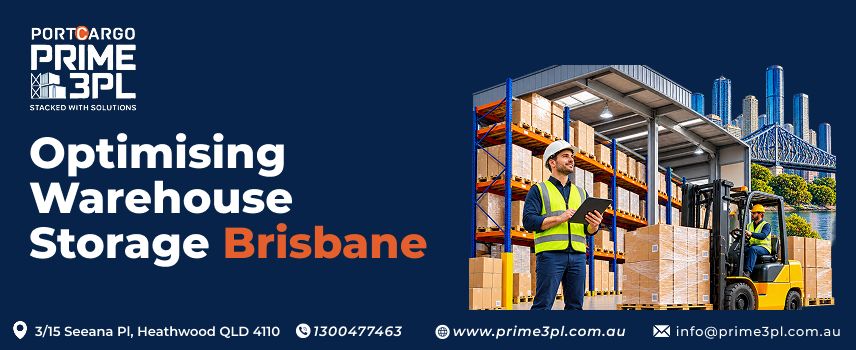
Efficient storage in the warehouse is often highly import...
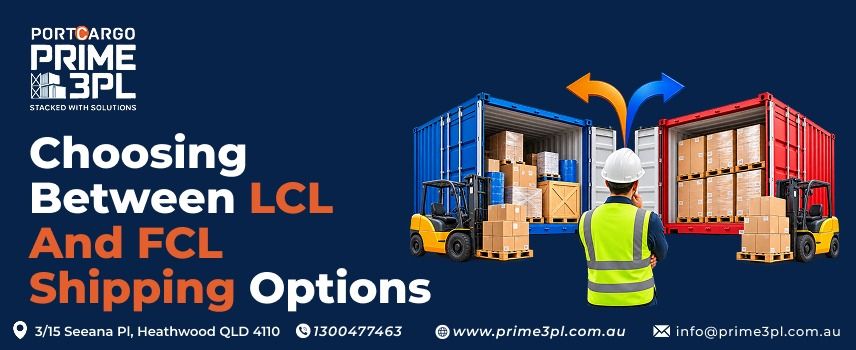
Selecting the right shipping option becomes necessary for...
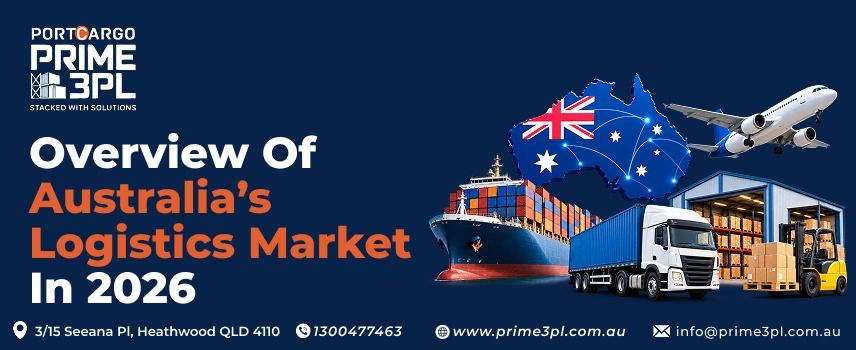
The logistics industry in Australia is one sector that as...
Discover our logistics, warehousing, fulfillment and supply chain solutions designed to support businesses of every size.

From a single parcel to full truckloads. we ensure your shipments reach their destination - safely and on time.

we get back to you within one business day.

Your goods are protected every step of the way.

Dedicated logistics specialists ready to help
Welcome to WhatsApp Chat and Share. Contact us if you need help.
Oprational Manager All Sales