How AI Is Changing Wareho...
Warehouses are an important part of Australia's suppl...
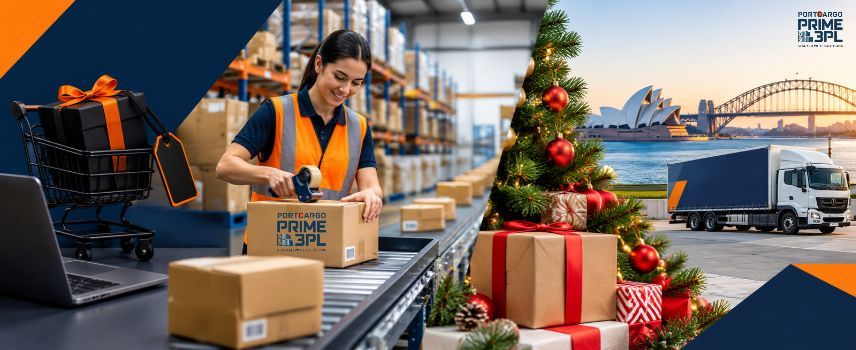
Black Friday and Christmas are two of the busiest shopping periods for Australian retailers. Customers look for special offers, early Christmas gifts, and fast delivery, creating opportunities for eCommerce businesses to increase sales. However, higher order volumes can put pressure on inventory, warehouse space, staff and delivery networks.
For online retailers, successful Black Friday and Christmas fulfilment planning involves more than offering attractive discounts. Businesses need a reliable strategy to manage stock, process orders efficiently and deliver products within the expected timeframe.
Black Friday falls on 27 November 2026, followed by Cyber Monday on 30 November. Many retailers start their promotions earlier and continue them throughout December, making early preparation essential. Business Victoria identifies Black Friday as an important opportunity for Australian businesses to reach customers ahead of Christmas.
This guide explains how retailers can manage seasonal demand, prepare warehouse operations and improve fulfilment performance. It also explores how Prime3PL can support businesses seeking reliable warehousing and eCommerce fulfillment services in Australia.
Peak season fulfilment in Australia is about preparing every stage of the order journey before demand increases. This includes receiving stock, storing products, picking and packing orders, arranging dispatch, and managing returns.
Without proper planning, businesses may experience stock shortages, incorrect orders, rising operational costs, and delayed deliveries. These issues can affect customer satisfaction and reduce the benefits of a successful sales campaign.
For example, an online retailer might receive twice its usual daily orders during a promotional weekend. If the warehouse has limited packing stations or inaccurate inventory records, the team may struggle to process orders on time.
Effective planning helps retailers:
The goal is to build a fulfilment operation that can handle changing demand without compromising service quality.
Inventory management for eCommerce is one of the most important parts of seasonal preparation. Retailers need to understand which products customers are likely to buy, how much stock they may need, and when replenishment should happen.
Start by reviewing sales data from previous Black Friday campaigns, Christmas periods and other promotional events. Look at best-selling products, average daily orders, product returns and the time suppliers need to deliver new stock.
Next, identify products that may experience increased demand because of seasonal promotions, gift purchases or changing customer preferences.
Retailers should also consider current sales trends, planned advertising campaigns and supplier availability. Historical data provides a useful starting point, but it should not be treated as a guarantee of future demand.
Practical inventory planning steps include:
Accurate stock information is especially important when selling through multiple channels. If a product sells through a website and a marketplace, inventory records should be updated consistently to reduce overselling.
Higher order volumes can quickly expose weaknesses in warehouse operations. Peak season warehouse management requires businesses to prepare storage space, staff schedules, equipment and packing materials before the busiest days arrive.
Start by reviewing the warehouse layout. Fast-moving products should be positioned where workers can access them efficiently, while fragile, bulky or slow-moving items should have suitable storage arrangements.
Retailers should also check whether they have enough cartons, mailers, labels, protective packaging, and other essential supplies. Running out of packaging materials can delay dispatch even when products are available.
Staff planning is equally important. Businesses may need additional workers or adjusted shifts to handle receiving, picking, packing and dispatch. Workers should understand their responsibilities and follow consistent procedures.
A well-prepared warehouse should have:
For businesses with limited warehouse capacity, working with a suitable third-party logistics provider may offer additional operational flexibility.
Black Friday order fulfilment involves more than processing a large number of orders. Retailers need to maintain accuracy and speed while managing the pressure of promotional sales.
One effective approach is to review the complete order process, from the moment a customer completes checkout to the time the parcel leaves the warehouse.
Warehousing storage in Brisbane systems can help teams track inventory, locate products, generate picking instructions, and update order status. Barcode scanning can also reduce manual errors when selecting and packing products.
Retailers can improve order processing by grouping suitable orders, organising popular products in accessible locations, and setting clear priorities for urgent shipments.
For example, if a retailer sells hundreds of the same product during a Black Friday promotion, placing that item in an accessible picking location may reduce unnecessary movement around the warehouse.
However, speed should not come at the expense of accuracy. Sending the wrong product can create additional shipping costs, customer complaints and returns.
Businesses should monitor key fulfilment measures, including:
Tracking these measures helps retailers identify bottlenecks and make improvements throughout the peak period.
Christmas shipping and delivery planning is essential for businesses that promise customers their purchases will arrive before Christmas Day.
Australian delivery networks can experience increased parcel volumes during November and December. Regional destinations, remote communities and interstate shipments may also require additional transit time.
Retailers should contact their delivery partners early, understand available shipping services and confirm seasonal collection arrangements. Delivery cut-off dates should be checked against the carrier's latest published guidance rather than relying on dates from previous years.
For 2026, Australia Post publishes Christmas sending dates for different services and destinations. Its guidance highlights the importance of allowing extra time for regional and rural deliveries. Retailers can check the official Australia Post Christmas lodgement dates when preparing their shipping schedules.
Businesses should also:
Avoid promising guaranteed Christmas delivery unless the relevant service and conditions support that promise. Clear communication helps customers make informed purchasing decisions and reduces avoidable inquiries.
Seasonal demand planning for retailers involves balancing customer demand with available stock, labour, warehouse space, and delivery capacity.
Ordering too little stock can lead to missed sales. Ordering too much can leave businesses with excess inventory after the festive season, tying up cash and increasing storage costs.
The same balance applies to staffing and warehouse resources. Too few workers may create dispatch delays, while excessive staffing without sufficient demand can increase operating expenses.
Retailers should create different demand scenarios based on expected sales. For example, a business might prepare a standard forecast, a higher-demand forecast, and a lower-demand forecast.
Each scenario should include an appropriate plan for inventory, labour, storage, and dispatch.
It is also useful to review performance throughout the campaign rather than waiting until the end. If sales are higher than expected, businesses can adjust replenishment plans, prioritize important orders, and review available warehouse capacity.
This flexible approach helps retailers respond to real demand instead of relying entirely on initial forecasts.
Fulfilment planning should not stop when Christmas deliveries are completed. Returns and exchanges can increase after customers receive gifts, change their minds, or discover that a product does not meet their expectations.
A poorly organised returns process can create warehouse congestion and make it harder to manage regular orders.
Retailers should establish a clear returns policy, provide simple instructions, and allocate space for returned products. Returned items may need to be inspected before they can be placed back into saleable inventory.
A structured process should cover:
Businesses should also review return reasons after the season. Common issues, such as inaccurate product descriptions or unsuitable packaging, may reveal opportunities to improve the customer experience.
Managing seasonal fulfilment internally can become difficult when order volumes increase beyond normal capacity. A third-party logistics (3PL) provider can support businesses with warehousing, inventory handling, order picking, packing and dispatch.
A suitable 3PL warehouse in Australia may help retailers manage seasonal peaks without having to build and operate additional warehouse infrastructure themselves.
Potential benefits include:
Flexible warehousing: Access to suitable storage capacity can help businesses manage additional inventory when arrangements and space are available.
Order fulfilment support: Established picking, packing, and dispatch processes can help manage increased order volumes.
Inventory visibility: Appropriate inventory systems and reporting can help businesses understand stock availability and product movement.
Operational flexibility: Outsourcing selected logistics activities may reduce pressure on an internal team during promotional campaigns.
Support with returns: Agreed returns-handling processes can help businesses manage post-Christmas product inspections and inventory updates.
The right arrangement depends on product type, order volumes, service requirements, integration needs, and budget. Retailers should confirm storage capacity, processing cut-off times, carrier arrangements, and seasonal service commitments with any potential provider before peak season begins.
For businesses seeking eCommerce fulfillment in Australia solutions, Prime3PL can be considered as a logistics partner for discussing warehousing and fulfilment requirements.
Use this checklist to review your preparation before the busiest trading weeks.
Completing these tasks early gives businesses more time to address problems before they affect customers.
Black Friday and Christmas offer valuable opportunities for Australian retailers, but higher sales also bring greater operational demands. Effective Black Friday and Christmas fulfilment planning helps businesses manage inventory, prepare warehouse capacity, organise staff, improve order processing, and coordinate delivery schedules to meet customer expectations.
Strong fulfilment planning also extends beyond the initial sales rush. Managing returns, reviewing performance, and learning from seasonal results can help businesses improve their operations for future campaigns.
For retailers experiencing growing order volumes, a suitable logistics partner can provide additional support with storage, inventory handling, and order fulfilment.
Get Ready for Peak Season with Prime3PL. Contact us on 1300 477 463 today to discuss your warehousing and fulfilment needs and find the right logistics solution for your business.
Black Friday and Christmas fulfilment planning involves preparing inventory, warehouse operations, staff, packaging, and delivery services to manage increased customer orders during the festive shopping season.
Retailers should review previous sales data, forecast product demand, replenish popular items, prepare warehouse staff and equipment, test order processing systems, and confirm shipping arrangements before promotions begin.
Effective inventory management helps retailers maintain accurate stock records, reduce stockouts and overselling, control excess inventory, and fulfil customer orders accurately during periods of increased demand.
A third-party logistics (3PL) provider can support retailers with warehousing, inventory handling, order picking, packing, and dispatch. Depending on the agreed services and available capacity, outsourcing these activities can help businesses manage seasonal demand more efficiently.
Retailers should ideally begin planning several months before the peak season. Early preparation allows time to forecast demand, order stock, arrange warehouse capacity, prepare staff, and confirm delivery schedules before November and December order volumes increase.
Businesses can manage higher order volumes by improving inventory accuracy, positioning popular products for easier picking, preparing sufficient packing stations, training staff, and monitoring order processing times. A suitable 3PL partner may also provide additional warehousing and fulfilment support.
Retailers can reduce the risk of shipping delays by confirming carrier schedules early, checking current Christmas lodgement dates, setting realistic order cut-off times, allowing sufficient warehouse processing time, and sharing tracking updates with customers. Regional and remote deliveries may require additional transit time.
Retailers can manage post-Christmas returns by establishing a clear returns policy, allocating space for returned goods, inspecting products promptly, updating inventory records, and processing refunds or exchanges according to their policies. Reviewing return reasons can also help businesses improve product descriptions and packaging.


The choice of the correct logistics company is a key issu...

Delivery optimization is critical for businesses to be ab...
Discover our logistics, warehousing, fulfillment and supply chain solutions designed to support businesses of every size.

From a single parcel to full truckloads. we ensure your shipments reach their destination - safely and on time.

we get back to you within one business day.

Your goods are protected every step of the way.

Dedicated logistics specialists ready to help
Welcome to WhatsApp Chat and Share. Contact us if you need help.
Oprational Manager All Sales